Is the Next CEO Already Leading Your Sales Organization?
At the latest Commercial Excellence Circle, C&S Partners explored why commercial leadership is becoming one of the strongest pathways to general management and what still prevents many Chief Sales Officers from reaching the top.
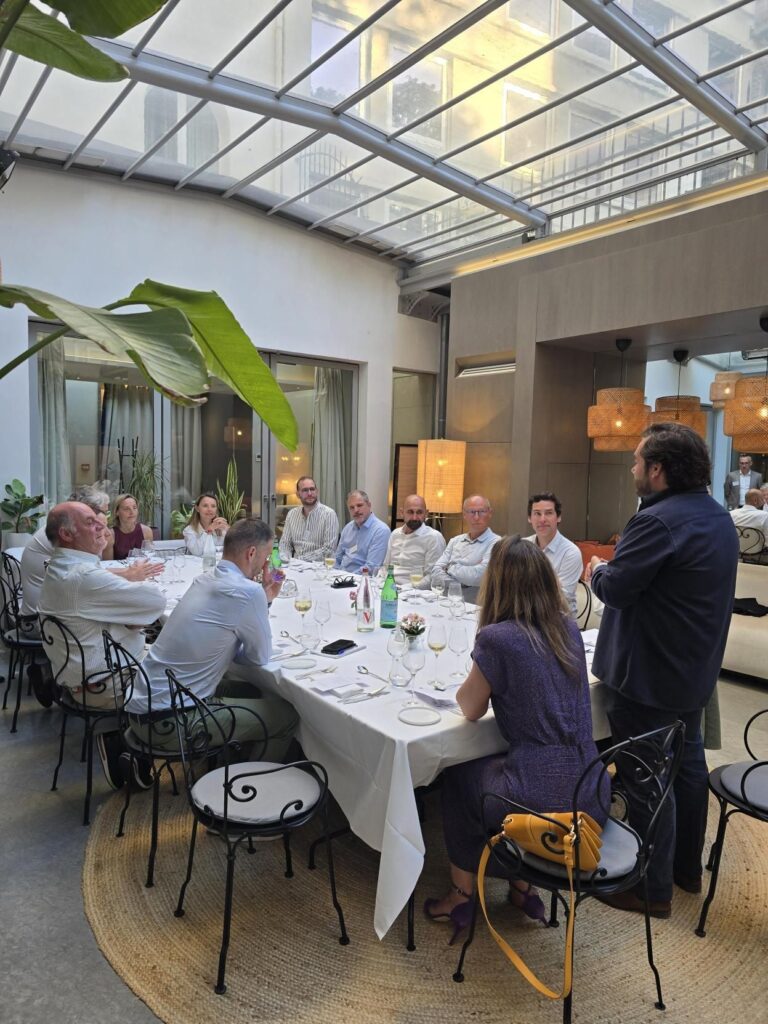
The role of the Chief Sales Officer is no longer confined to driving revenue. In today’s volatile business environment, commercial leaders are expected to shape growth strategies, orchestrate transformation and balance profitability with long-term value creation. This shift was at the heart of the latest round table of Commercial Excellence Circle (Cercle de l’Efficience Commerciale), hosted by Akeron in partnership with Décideurs Magazine and BSMART 4Change.
Joining the discussion alongside Cyrille Meunier, President of the French Association of Commercial Executives (DCF), Gérald Bouhourd, Co-founder and President of C&S Partners, shared his perspective on a question that is becoming increasingly relevant for executive teams: why do so few Chief Sales Officers ultimately become CEOs?
Breaking the historical bias
According to Gérald Bouhourd, the answer lies less in capability than in perception. For decades, commercial leaders have primarily been viewed as sales performers responsible for generating revenue but rarely seen as enterprise leaders. CEO appointments have traditionally favoured operations or finance executives, perceived as better equipped to balance competing priorities across the organization.
Yet this perception no longer reflects reality. Today’s commercial leaders oversee pricing, customer segmentation, organizational design, customer experience and business transformation. Their close understanding of markets gives them a unique perspective on where growth opportunities lie and how companies should evolve to capture them.
From selling more to creating profitable growth
One of the key messages shared during the discussion was that commercial excellence can no longer be measured by revenue alone.
Modern sales organizations are expected to drive profitable growth. This requires mastering pricing strategies, allocating resources effectively, prioritizing customer segments and making informed trade-offs between growth ambitions and financial performance.
Commercial leadership has therefore become a discipline that combines market insight with strategic decision-making—far beyond the traditional objective of simply increasing sales.
Why go-to-market has become a CEO topic ?
Another major theme was the growing strategic importance of go-to-market.
Changing customer expectations, geopolitical uncertainty and increasingly complex buying journeys are forcing organizations to rethink how they approach markets. Customer segmentation, sales specialization, channel strategies and organizational models have become critical competitive levers.
As Gérald Bouhourd explained, go-to-market is no longer merely a commercial concern—it has become a boardroom issue because it directly influences a company’s ability to create value and sustain growth.
Thinking beyond the customer
So what differentiates commercial leaders who successfully become CEOs? According to Gérald Bouhourd, technical expertise is rarely the deciding factor.
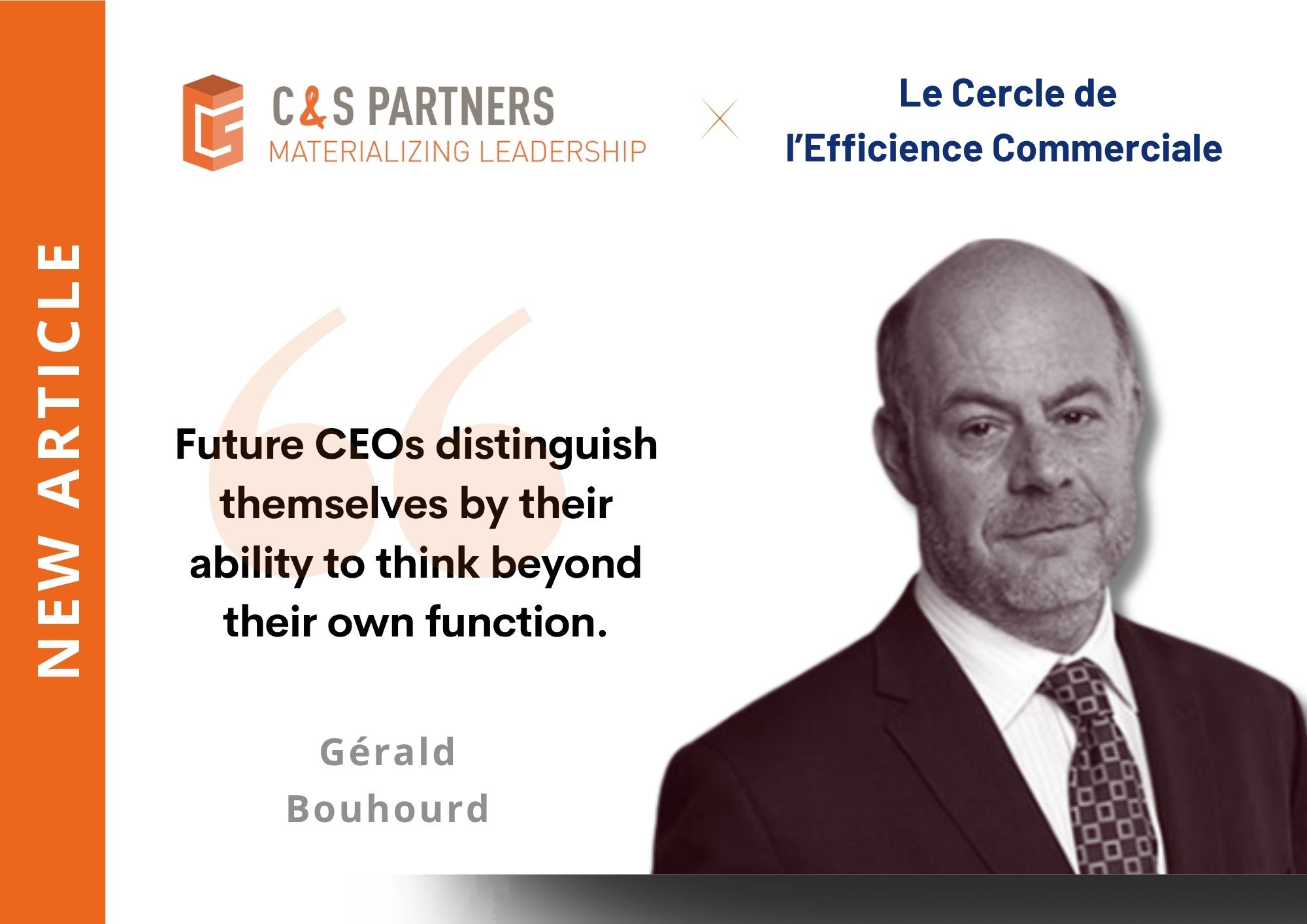
Future CEOs distinguish themselves by their ability to think beyond their own function. They understand financial and operational constraints, navigate cross-functional trade-offs and align diverse stakeholders around a shared strategic vision.
Ultimately, the challenge is to move from being the customer’s advocate to becoming the architect of the company’s overall balance – adopting a leadership posture that considers the interests of the entire organization rather than a single function.
A changing profile for tomorrow’s CEOs
The discussion concluded with a clear observation: the profile of successful CEOs is evolving. As organizations seek leaders capable of driving transformation, innovation and sustainable growth, commercial executives who broaden their perspective beyond sales are becoming increasingly credible candidates for the highest executive roles.
For C&S Partners, commercial leadership is no longer simply about delivering results. It has become a strategic capability – one that prepares leaders to shape the future of their organizations and, increasingly, to lead them.